Grammar Notes: Lesson 2
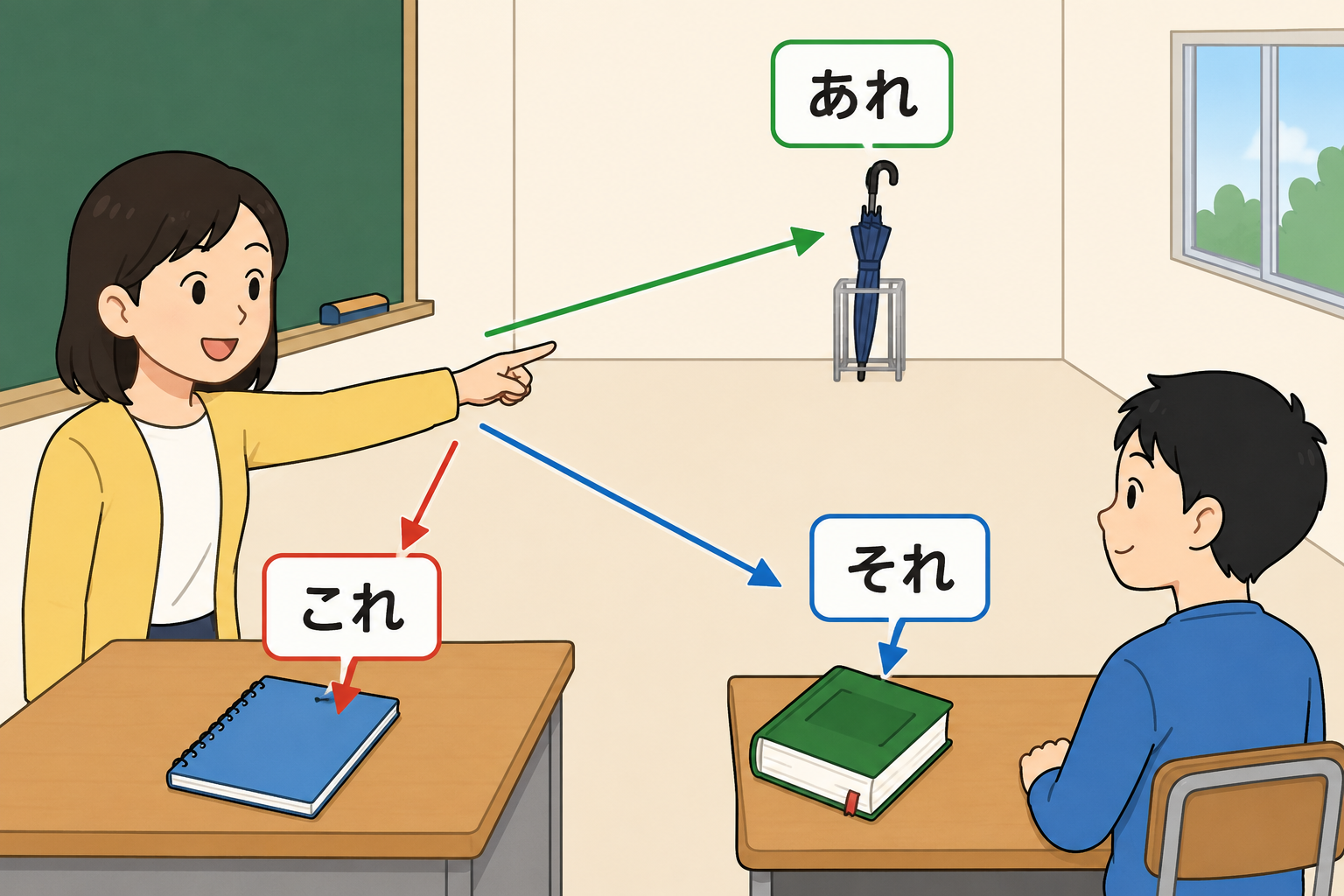
Demonstratives 1: これ, それ, あれ
This lesson introduces demonstrative pronouns for things.
これ / それ / あれ
Description
これ, それ, and あれ are demonstrative pronouns. They are used independently and are not attached to nouns.
Swipe left or right to view all columns
Examples
Swipe left or right to view all columns
Usage Notes
- これ, それ, and あれ act as nouns by themselves.
- Do not attach them directly to nouns.
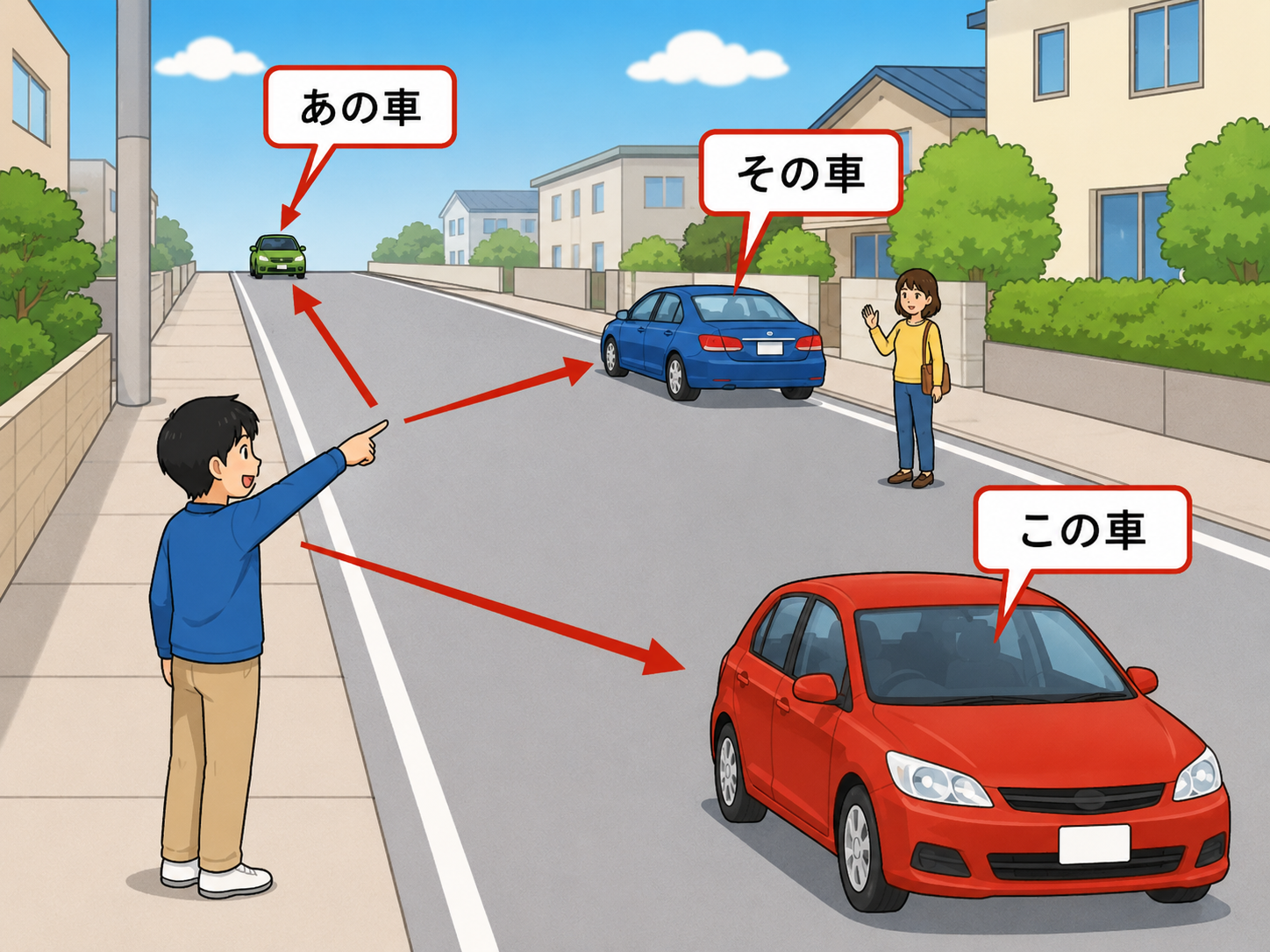
この [Noun] / その [Noun] / あの [Noun]
Description
この, その, and あの are used before nouns.
この車 acts as one noun phrase meaning "this car." これ acts as a noun by itself, meaning "this thing."
Examples
Swipe left or right to view all columns
Usage Notes
- Correct: この車は日本製です。
- Incorrect: これ車は日本製です。
- この, その, and あの must be followed by a noun.
そうです / そうじゃありません
Description
そうです means "That is right." そうじゃありません means "That is not right."
Examples
Swipe left or right to view all columns
Usage Notes
- そうです is used to confirm that a statement is correct.
- いいえ、違います has a similar meaning to いいえ、そうじゃありません in this context.
~か、~か
Description
Use ~か、~か to ask an "A or B?" question.
Examples
Swipe left or right to view all columns
Usage Notes
- Answer with the correct option, not with はい or いいえ.
そうですか
Description
そうですか is used when hearing new information to indicate understanding. It can mean "I see" or "Is that so?"
Examples
Swipe left or right to view all columns
Usage Notes
- With falling intonation, そうですか often means "I see."
- With rising intonation, it can sound like a question.
なん
Description
なん means "what."
Examples
Swipe left or right to view all columns
Usage Notes
- なん is used before ですか to ask what something is.
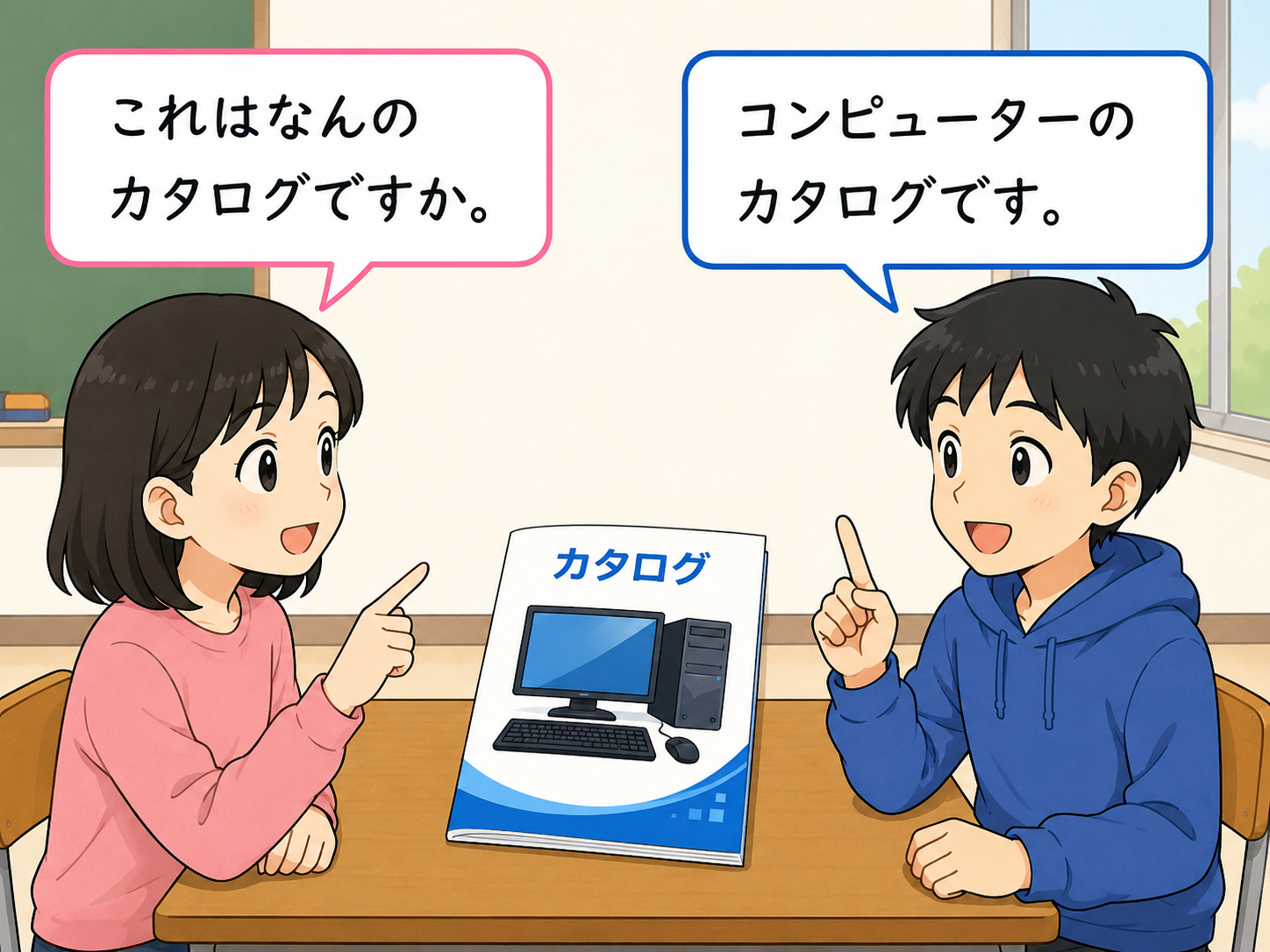
なんの [Noun]
Description
なんの [Noun] is used when asking about the content or category of a noun.
Examples
Swipe left or right to view all columns
Usage Notes
- なんの must be followed by a noun.
- It asks what kind or category something belongs to.
だれ
Description
だれ means "who."
Examples
Swipe left or right to view all columns
Usage Notes
- だれ is used to ask about a person.
- だれの [Noun] asks "whose ~," for example だれのノート ("whose notebook").